Classic save-point and route guide

Code Veronica Save Rooms: Typewriter Locations & Route Tips

Find the rooms that let you save, move items, and reset a bad attempt. This classic Code: Veronica X guide groups the practical save anchors from Rockfort Island to Antarctica, then explains when a second file is worth the ink ribbon.

  • Primary keywordCode Veronica save rooms
  • Classic scopeCode: Veronica X
  • What is listedTypewriters and route anchors
  • Remake boundaryNo unconfirmed layout claims
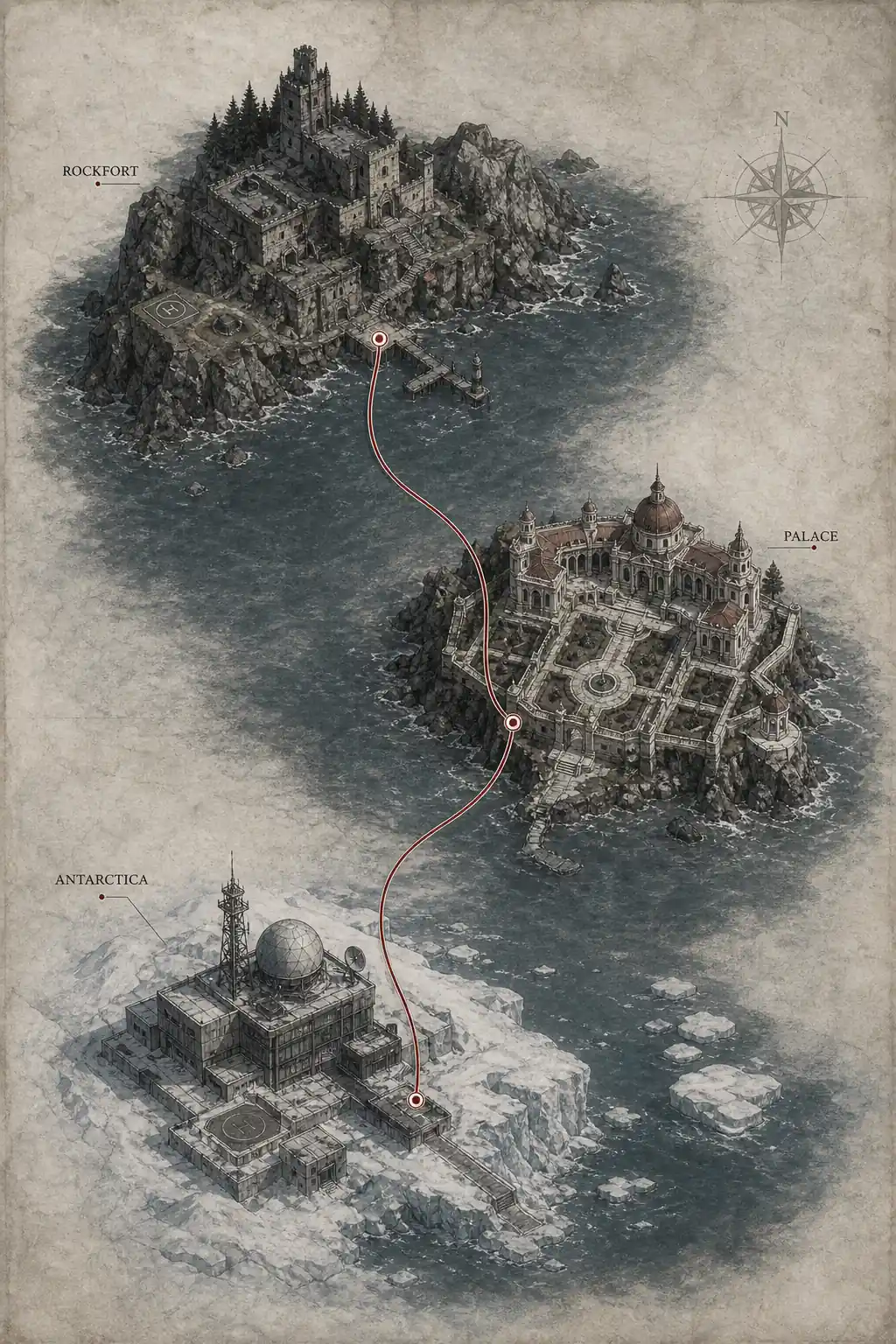
Editorial route map connecting the island, palace, airport, and Antarctica areas of Code Veronica
Existing editorial route visual used to explain save-room planning. It is not an official game map or screenshot.

Quick answer: how do Code Veronica save rooms work?

Code Veronica save rooms are the rooms where a typewriter gives you a manual save point. An item box may share the room, but it is not required for saving. You need an Ink Ribbon to use a typewriter, so a safe route keeps the next ribbon, a little healing, and the current key-item chain close to a known save anchor. The useful question is not simply where the nearest room is; it is which room you can reach again after a fight, puzzle loop, or character change.

This page is a save-room guide rather than a replacement for the full Code Veronica walkthrough. It answers the location task, explains the relationship between a typewriter and an item box, and gives a route-level plan for Claire and Chris. Use the walkthrough when you need the next door, the map page when you need area connections, and the item-box page when you need a storage layout. Keeping those jobs separate makes the save advice easier to use under pressure.

The scope is the classic Resident Evil - Code: Veronica and Code: Veronica X campaign. Room names, item contents, and the exact order of a return can vary between releases or depend on what you have already collected. The locations below therefore describe stable room roles and recognizable route phases. They do not promise that every optional herb, ammunition stack, or ribbon appears in the same place on every version.

A reliable first-run habit is to save when three things are true: the route just opened a new loop, your inventory has been reorganized, or the next section can remove your ability to return. Saving after every hallway spends ribbons without improving your recovery. Saving only after a boss can trap you with a weak inventory. The middle path is a small set of deliberate checkpoints that you can reload without replaying half the island.
Save-room locations

Code Veronica save rooms by route phase

Use these anchors to plan returns. The list focuses on the recognizable rooms that support saving and inventory resets, not on uncertain item-drop details.
Early Rockfort

Prison and guardhouse save anchor

After Claire leaves the opening prison sequence, the first dependable typewriter area becomes the natural reset point for the island route. It is close enough to early doors that a failed exploration does not have to erase all progress.

Look for
Typewriter with a nearby storage route
Best use
Save after the first key-item loop
Watch
Leave a slot for the next pickup
Training Facility

Model exhibition room

The model exhibition room is a documented save room in the Training Facility. The typewriter, item box, and nearby puzzle objects make it a useful base while you work through the facility and its picture or diorama sequence.

Look for
Room picture, typewriter, and box
Best use
Save before a facility puzzle chain
Watch
Do not confuse storage with progress
Palace and private residence

Palace-side save rooms

The Palace section gives you a central place to reset between locked-door and emblem-style tasks. Treat the nearby typewriter as a route anchor: return after a puzzle chain, then decide what belongs in the box before pushing deeper.

Look for
A typewriter beside a return corridor
Best use
Separate puzzle progress from combat stock
Watch
Optional detours can spend ribbons
Airport transition

Airport checkpoint

The Airport is a practical checkpoint before the story changes pace and control. Use the available save opportunity to review healing, strong ammunition, and the items that should remain reachable after the transition.

Look for
A typewriter before the one-way push
Best use
Create a separate handoff file
Watch
A full inventory can block recovery
Chris route

Returned island save anchors

Chris revisits familiar areas but does not inherit a perfect situation. The same typewriter rooms become new decision points because enemy pressure, weapon access, and puzzle ownership have changed.

Look for
The known room before a new loop
Best use
Save after the first Chris inventory reset
Watch
Claire's stored items may be elsewhere
Antarctica

Laboratory and underground save rooms

The Antarctic base works like a new late-game map. Save whenever a major facility loop closes, a difficult enemy section is cleared, or the route gives you a chance to protect a backup file before a final sequence.

Look for
Typewriter and box near late facility loops
Best use
Protect a late-game recovery point
Watch
Do not overwrite your only healthy file

A save-point route from Rockfort Island to Antarctica

The table is a decision guide rather than a promise of a single speedrun route. Save at a stable anchor after the meaningful change listed below, then keep the previous file when the next section can change character, access, or return options.

Route phaseWhen to saveWhy the checkpoint mattersWhat to check
Opening prisonAfter the first escape loop and key pickupYou have learned the basic route and can reload without repeating the opening scene.Ink Ribbon, healing, one free slot
Training FacilityBefore and after the model or picture puzzle chainA puzzle reset is cheaper than rebuilding the whole facility route.Active key item, box position, combat reserve
PalaceWhen a locked-door chain opens a new return pathThe Palace can turn one clue into several rooms of backtracking.Do not save with every optional detour
AirportBefore a major story transitionA second file preserves the Claire setup while you test what comes next.Handoff weapon, healing, empty slots
Chris routeAfter the first stable Chris resupplyThe character switch changes the value of stored equipment and familiar rooms.Ownership of keys and strong ammunition
AntarcticaBefore late locks, boss approaches, and irreversible pushesA late save protects your best recovery path when a blind attempt fails.Healthy file plus a backup file
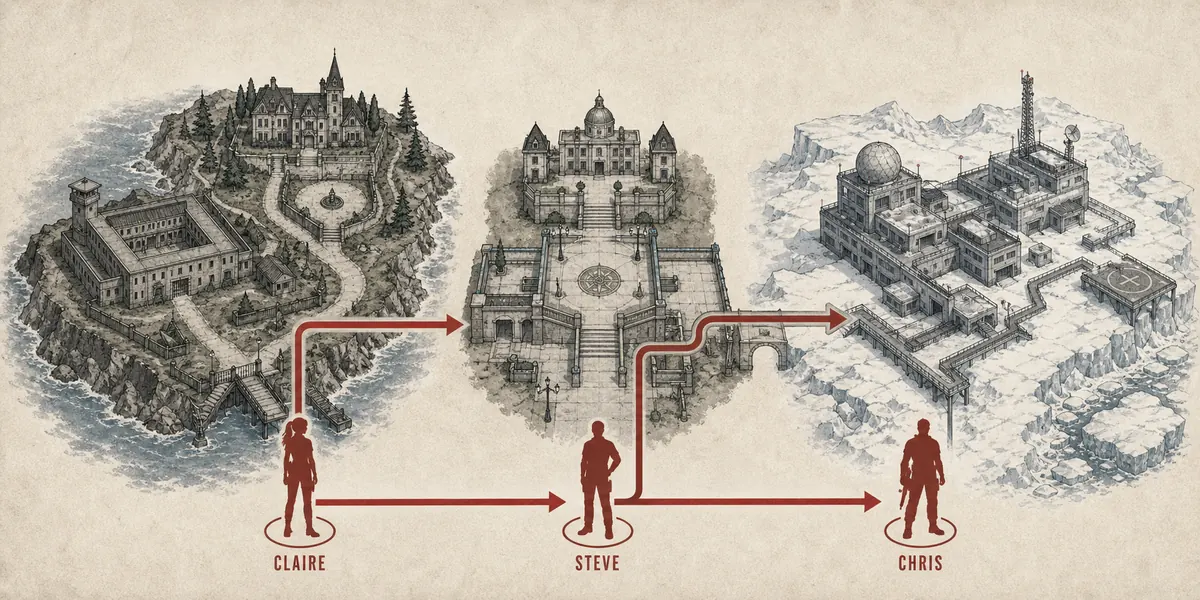
Editorial route flow from Rockfort Island through the Palace and Airport to Antarctica
Existing editorial route-flow visual for comparing save checkpoints. It is not an official game map.

Saving basics

Typewriters, Ink Ribbons, and item boxes

A save room works because several small systems meet in one place. Learn what each object does before you spend a ribbon or move a route item.
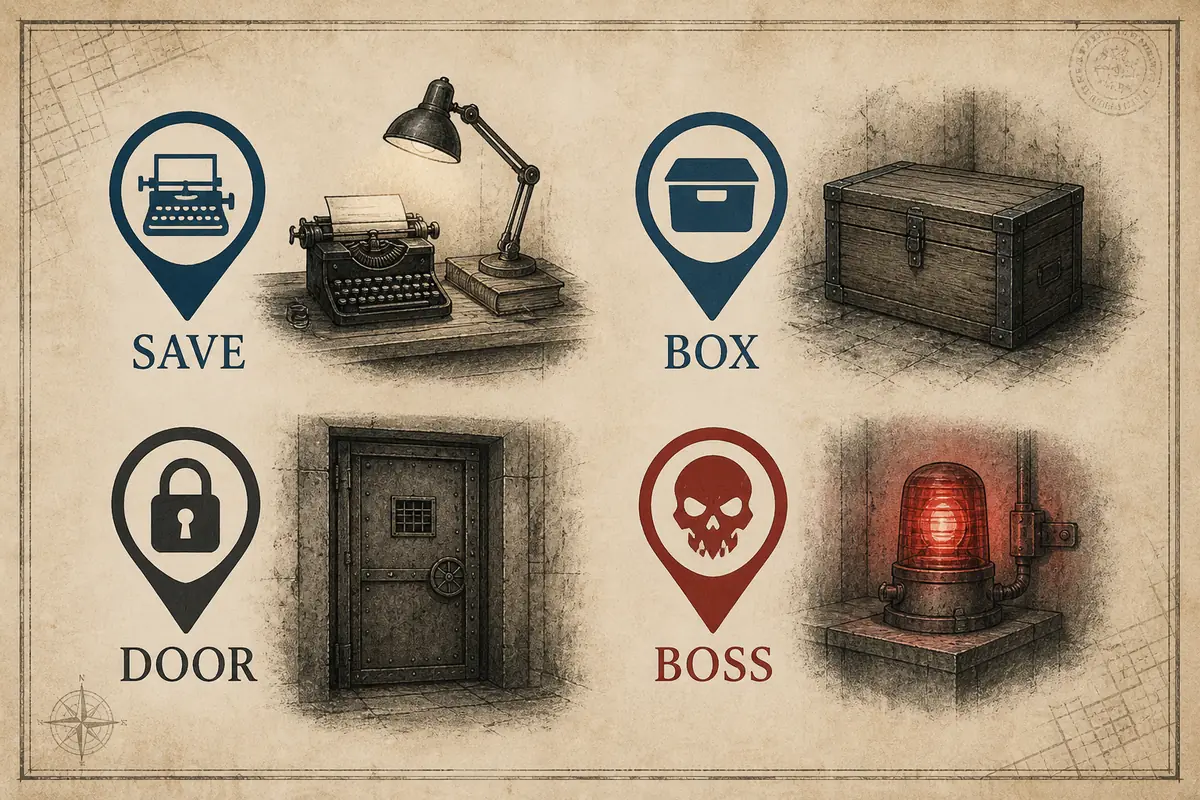
Editorial map legend showing a typewriter save point, item box, locked door, and boss checkpoint
Existing editorial marker visual used to explain save-room and item-box symbols. It is not an official game interface.

A typewriter is the save point

You do not need an item box to save, but you do need to reach a typewriter and have an Ink Ribbon. When a walkthrough says save room, read it as a room built around that typewriter interaction, even if the box is in another corner or on the other side of a short corridor.

Ink Ribbons are a route resource

An Ink Ribbon is not a reason to save after every door. Spend one when the route has delivered a meaningful change: a new key chain, a character handoff, a hard enemy section, or a one-way story step. Keep the next ribbon in a predictable box position so it is not lost among healing items.

The item box is a recovery tool

Use the box to stage a weapon, healing, or key item for the next loop, but do not confuse organized storage with a safe save. If the box is perfectly arranged and the file is old, you may still have to replay the entire route after a mistake.

Leave one slot before a return

A save room often signals that the next section will offer a key item, file, weapon, or puzzle object. Leave at least one open inventory slot before leaving. A spare slot can save more time than carrying one extra low-value round.

Keep two kinds of saves

A progress file records that the route is moving forward. A recovery file records that the inventory is healthy. They can be close together, but they should not always be the same file when a major transition is about to test your choices.

How to plan saves without wasting Ink Ribbons

The best Code Veronica save guide is a rhythm. First, reach a recognizable anchor. Second, empty the inventory of objects that do not belong to the next chain. Third, decide whether the next room is a normal route, a forced fight, or a point that may remove your return. Only then spend the ribbon. This turns saving into a route decision instead of a nervous habit.

If a section goes badly, reload the last healthy file rather than trying to prove that a weak attempt can still work. That is especially important when a character switch has changed which weapon or healing item you can reach. A failed save is not only a lost ribbon; it can also hide the fact that your next playable character has inherited an empty inventory.

Save after information, not just distance

A new door, puzzle answer, or enemy pattern is useful information. Save after you have learned it and returned to a stable room, because the next attempt can now be shorter and calmer.

Use a backup before a one-way route

Create a second file before a vehicle, cutscene, character handoff, or deep facility descent if the classic route offers a typewriter nearby. Keep the earlier file until the next room proves that the inventory is workable.

Do not spend a ribbon on a dead end

If you are carrying the wrong key, have a full inventory, or are about to enter an optional room, return to the last anchor first. Saving at the end of a bad detour preserves the detour, not the progress you wanted.

Pair the save with a box reset

When you save, take a moment to separate puzzle items, ordinary ammunition, healing, and the next character's supplies. The file and the box should tell the same story about what you plan to do next.

Write a short label outside the game

A note such as 'Airport handoff, Claire healthy' or 'Antarctica before boss' can prevent loading the wrong file after a break. The label is especially useful when several saves contain similar room names.

Claire and Chris

Character handoffs: save before the route changes hands

The safest handoff is a reversible decision. Preserve the earlier file, stage the box, and let the next character prove that the setup works.

Save before the transition

Use a separate slot before the story commits to a new playable character. If the inherited supplies are awkward, you can correct the setup without replaying every island room.

Stage a routine weapon

Chris needs a weapon he can use immediately, not only a rare weapon that is still buried in a distant box. Keep the practical answer close to the handoff save.

Protect healing and a free slot

A character switch can lead straight into a new corridor or pickup. Leave healing visible and keep space for a key item instead of filling every slot before the scene.

Record borrowed ammunition

If the handoff requires borrowing from a boss reserve, note what moved. Returning unused rounds to one known box later keeps the recovery file readable.

Reload the earlier file when needed

A bad handoff is a planning problem, not a reason to spend the next ten ribbons experimenting. Reload, reorganize, and create a new checkpoint after the next character has a stable route.

Classic Code: Veronica X saving versus remake assumptions

This Code Veronica save rooms guide describes the classic campaign and its manual typewriter system. The save rhythm, Ink Ribbon idea, and value of a backup file are useful survival-horror habits, but the exact room connections and item placement belong to the legacy game. Community room references and old walkthroughs are supporting sources, not official remake documentation.

Resident Evil Veronica may change room geometry, checkpoints, automatic saving, inventory rules, or how Claire and Chris move through the story. Until Capcom publishes those details, do not read this page as a remake map. Use the official Resident Evil site for project facts, then return here for classic Code: Veronica X planning.

The same boundary applies to item contents. A typewriter is the stable reason to visit a save room; a particular herb, ammunition stack, or ribbon is a version-sensitive detail. When your copy differs, trust the room interaction you can see and update your own route note rather than forcing an old checklist to fit.

Continue the route

Use the save guide with the right Code Veronica page

This page answers where and when to save. Follow the focused guide that matches the next blocker instead of turning a save-room list into a full walkthrough.

Save-room FAQ

Code Veronica save rooms and typewriter questions

You save at typewriters placed in recognizable safe-room or route-anchor rooms. Early prison and Training Facility rooms, Palace-side returns, the Airport transition, Chris's return route, and Antarctic facility loops are the useful phases to track.

No. A typewriter is the object that lets you save, while an item box stores equipment. They are often close together, but you should treat them as separate functions when planning a route.

There is no universal number that fits every release and play style. Keep the next ribbon accessible, spend one after meaningful progress or before a risky transition, and avoid using them for every optional room.

Yes, when possible. The Airport is a useful handoff checkpoint because the story and playable-character priorities can change. Keep the earlier healthy file until the next section is stable.

Yes. Reference material identifies the model exhibition room as a save room with a typewriter, and it also connects to item and puzzle planning. Use it as a facility checkpoint rather than assuming every nearby item is a permanent fixed drop.

No. It is classic Code: Veronica and Code: Veronica X guidance. The remake may change room connections, automatic saves, inventory rules, and checkpoints, so use official Capcom information for remake-specific details.

Save before a boss or forced fight when the route gives you a typewriter and a recovery option, but keep a separate healthy file when possible. The goal is to preserve a workable inventory, not to spend a ribbon on every hallway.

Reload the previous healthy file, reorganize the item box, and test the next character or route with a deliberate loadout. If there is no backup, stop spending resources on panic attempts and use the nearest stable room to rebuild your plan.